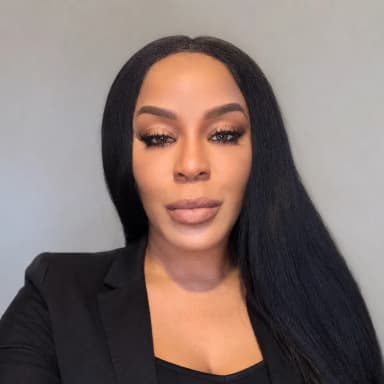
Your provider
Shumeka Hill
DNP, PMHNP-BC, FNP-BC, CPNP-AC, LCDC II
Care gets split up. One service handles the ADHD medication, another the weight loss, a third the therapy — and the person holding all three is you, carrying your own history between them and hoping somebody notices how they interact.
This practice is built the other way around. Holding board certification in both psychiatric mental health and family practice means your mental health, your substance use, your hormones and your physical health can be addressed by one person, in one relationship, who has the whole picture.
Credentials, and what each one means
Letters after a name are only useful if you know what they let someone do.
- DNPDoctor of Nursing Practice
- The terminal practice degree in nursing — an academic doctorate, not a medical degree. Your provider is a nurse practitioner, not a physician.
- PMHNP-BCPsychiatric Mental Health Nurse Practitioner, Board Certified
- Diagnosis and treatment of mental health conditions, including medication management — ADHD, depression, anxiety, PTSD, bipolar disorder and sleep disorders.
- FNP-BCFamily Nurse Practitioner, Board Certified
- Primary and preventive care across the lifespan — chronic conditions, men's and women's health, dermatology and everyday medical care.
- CPNP-ACCertified Pediatric Nurse Practitioner, Acute Care
- Specialized training in pediatric care, including adolescent evaluation.
- LCDC IILicensed Chemical Dependency Counselor II
- Substance use counseling — which means your prescriber and your counselor are the same licensed person.
Licensure
Licensed to practice in 23 states: Arizona, Nevada, Montana, New Mexico, Utah, Georgia, Tennessee, South Carolina, Alabama, Mississippi, Missouri, Indiana, Florida, Ohio, Illinois, Washington, Oregon, Colorado, Maine, Alaska, North Dakota, Texas, New Hampshire.
Patients must be physically located in a licensed state at the time of their appointment. Scope of practice for nurse practitioners varies by state, and care is delivered in accordance with the requirements of the state you are located in.
See all 23 states →What I treat
How I practice
- Appointments are long enough to be useful. A first visit is 45–60 minutes, not fifteen.
- You see me every time. Not a panel, not whoever is on shift.
- I will tell you when telehealth isn't enough. Some things need hands and a room, and you deserve to be told that plainly.
- No prescription is promised in advance. Treatment follows evaluation. That is what makes it treatment.